Pharmaceuticals

Product Registration

Product Registration

Drug Product Registration

Drug product registration is the process by which pharmaceutical companies seek approval from regulatory authorities to market and sell their drugs within a particular country or region. This process is crucial to ensure that drugs meet rigorous safety, efficacy, and quality standards before they are made available to patients. The data is submitted by the Pharmaceutical Company for the Registration of the Drug Product.

The applicant must submit the data required by the relevant regulatory authority for the product and application pathway. Depending on the product type and whether the application is for a new, generic, or biological medicine, this may include nonclinical (preclinical), clinical, bioavailability, or bioequivalence data. Some pathways may allow the use of existing data or a waiver of specific studies. Confirm the requirements for each target market before conducting studies.

The Common Technical Document (CTD) is organized into five modules. Module 1 contains regional information and varies by regulatory authority; Modules 2–5 follow the common ICH structure. For U.S. FDA submissions, the currently supported eCTD versions are v3.2.2 or v4.0, depending on the submission type and applicable FDA standards. For EU submissions, the current specification is eCTD v3.2.2 with EU Module 1 Specification v3.1.1 and Validation Criteria v8.2. Always confirm the applicable technical requirements for the specific authority and submission before filing.

Modules of eCTD are:
  • Module 1 – Administrative Information and Regional Information
  • Module 2 – Summaries
  • Module 3 – Quality Data
  • Module 4 – Non-clinical Data
  • Module 5 – Clinical Data

The timeline for the drug registration is different for the different countries depending on the evaluation process of Application. Each regulatory authority has department for the evaluation. The regulatory authority performs the onsite inspection of manufacturing facility.

For the Registration of the drug product in each country has registration fee according to the protocol of the regulatory authority of the country. OMC Medical can help the pharmaceutical industry to register their product across the globe, providing the expert guidance and valuable support throughout the regulatory pathway from industry to market.

The navigating point where you will get all types of the information services for registration a product.

Pharmaceutical Product Categories

Medicines may be classified in different ways depending on the country, product, and applicable laws. Prescription status and controlled-substance status are separate classifications and may overlap. For example, some opioid medicines are prescription-only and also controlled under national law.

  • By prescription status: Prescription-only medicines and over-the-counter (OTC) medicines.
  • By controlled-substance status: Medicines scheduled or controlled under the applicable country’s laws.
  • Prescription Drugs: Drugs that require a prescription from a licensed healthcare provider. Examples include antibiotics, antidepressants, and opioids.
What does a medicine need before it can be legally sold?

Usually an authorization from the regulator, often called a marketing authorization or approved application, before the product can be sold or imported. In the U.S., for example, drugs may require an approved marketing application, and a product that needs one without it is subject to refusal. Requirements vary by country.

Who grants the marketing authorization?

A national or regional regulator. Under the EU centralized procedure, the EMA scientifically evaluates the application and the European Commission grants the authorization, which is then valid across the EU, Iceland, Norway and Liechtenstein. Other countries run national procedures with their own agencies and timelines.

What is the CTD or eCTD format?

The Common Technical Document (CTD), defined in ICH guideline M4, organizes a registration dossier into five modules. Module 1 holds regional administrative information and differs by authority, while Modules 2 to 5 (summaries, quality, nonclinical and clinical) are common to all regions. eCTD is its electronic format.

Does the applicant or holder have to be based in the country?

Often. EMA requires the holder of a centralized authorization to be established in the EEA, and the UAE regulator requires the applicant to be a licensed medical warehouse, a local manufacturer or a marketing office. Confirm the local establishment rule before you choose your applicant.

Do I need a local agent to register a medicine?

Often, but it depends on the country. The U.S. requires a foreign drug registrant to identify a U.S. agent, and India's import registration guidance says the Indian agent or the foreign manufacturer applies. Check whether your target regulator requires an agent and what it may do.

Does my company need to be registered before I apply for the product?

Some regulators ask for company or establishment registration first. The UAE regulator, for example, states that marketing authorization holder companies must be registered before they can apply for authorization, and the U.S. requires foreign registrants to register and list each drug before offering it for import.

How long is a marketing authorization valid?

The regulator sets the validity. The UAE regulator, for example, issues marketing authorization certificates valid for five years or for the validity it grants. Diarize renewal dates for each country, because the periods and renewal procedures differ and a lapsed authorization can interrupt supply.

Do imported medicines need an import license as well as registration?

Often these are separate steps. India's import registration guidance, for example, describes a registration certificate first, then an import license, and a new drug also needs new drug approval. Check the sequence in each country so you do not ship before the import permission is in place.

How long does drug registration take in each country?

Timelines vary widely by country, product type and route. Reliance or abridged routes can take months, while full reviews of new drugs often take a year or more. Delays come from regulator queries, inspections, document legalization and translation. Check the relevant country page for a realistic estimate before you plan a launch.

What is the difference between a generic and an innovator registration dossier?

An innovator dossier contains full quality, nonclinical, and clinical data. A generic dossier relies mainly on quality data and evidence that the product is equivalent to a reference product, often through bioequivalence, and may refer to the innovator's data. The data a regulator accepts differs by country.

Is bioequivalence testing required for every generic registration?

No. Many regulators require bioequivalence studies for most oral generics, but waive them in some cases, such as certain solutions or products with a recognized biowaiver basis. Requirements differ by country and by product, so confirm the rules and the accepted reference product for each market before you plan studies.

How do I register biologics and biosimilars?

Biologics and biosimilars follow a more demanding route than small molecules. Regulators expect extensive quality data and, for biosimilars, a comparability exercise against a reference product, with nonclinical and clinical evidence. Many countries also publish specific guidance and run inspections. Check the target regulator rules before you plan the dossier.

What changes after approval and how are variations handled?

After approval, changes to manufacturing, specifications, labeling or the holder must be reported as variations. Regulators classify them by impact, with minor changes notified and major ones needing prior approval. The categories and timelines differ by country, so check each regulator's variation rules before you implement any change.

Which eCTD version does each authority accept?

Authorities accept different eCTD versions and regional modules, and some still accept paper or non-eCTD formats. Many follow eCTD v3.2.2, while some have moved to, or begun adopting, v4.0. Check each regulator's current submission specification before you build the dossier, because converting later costs time.

How do I register medicines in Sri Lanka, Saudi Arabia, Nigeria and Malaysia?

Each country has its own regulator, forms and local-holder rules. They typically require a local license holder or agent, a CTD-based dossier, a certificate of pharmaceutical product, GMP evidence and fees. The steps and timelines differ, so see the relevant country page for the market you are entering.

Can a distributor hold the registration instead of the manufacturer?

In some countries a distributor or local company can be the registration holder, while in others it must be a licensed local entity or the manufacturer's representative. A distributor-held registration can be hard to move if the relationship ends. Decide who will hold it before you submit, and set the terms in the contract.

Related Blogs

Stay updated with the latest regulatory updates and insights

A Strategic Guide to Pharmaceutical Product Registration in Senegal by OMC Medical

November 07, 2025

A Strategic Guide to Pharmaceutical Product Registration in Senegal by OMC Medical
Learn More
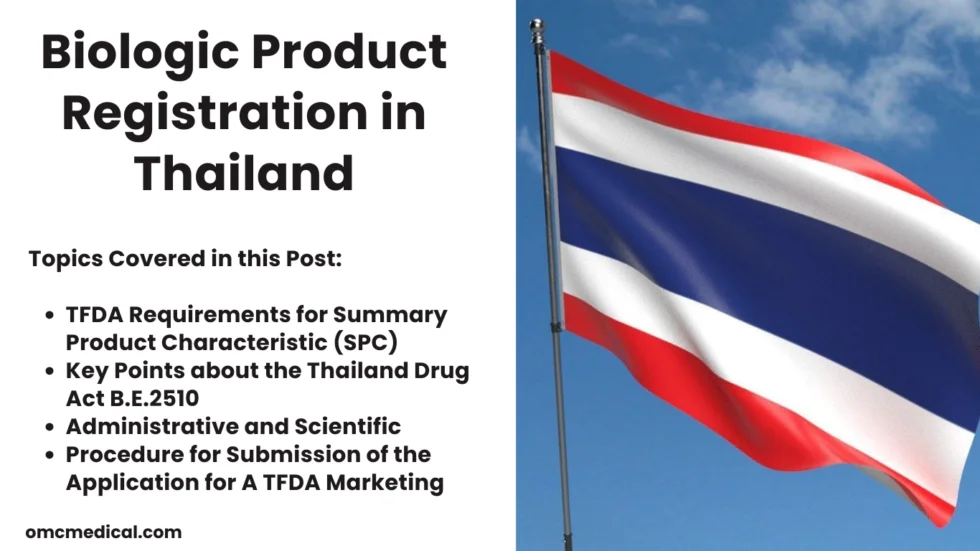
Navigating Biologic Product Registration in Thailand: TFDA Requirements, Procedures, and Validation Process

October 14, 2025

Navigating Biologic Product Registration in Thailand: TFDA Requirements, Procedures, and Validation Process
Learn More
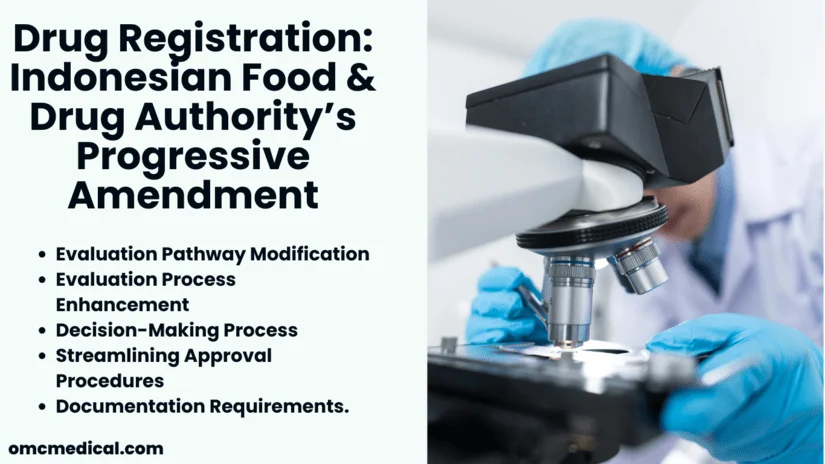
Overhauling Drug Registration: The Indonesian Food and Drug Authority’s Progressive Amendment

October 14, 2025

Overhauling Drug Registration: The Indonesian Food and Drug Authority’s Progressive Amendment
Learn More
LinkedIn Message on LinkedIn WhatsApp Start WhatsApp chat Call Call us