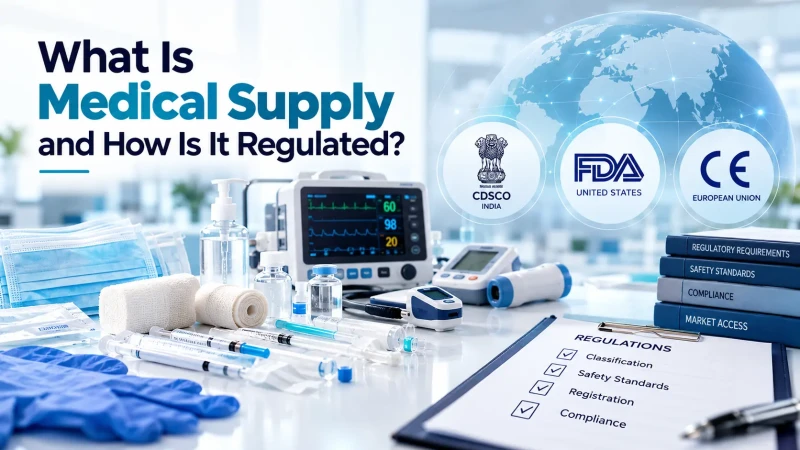
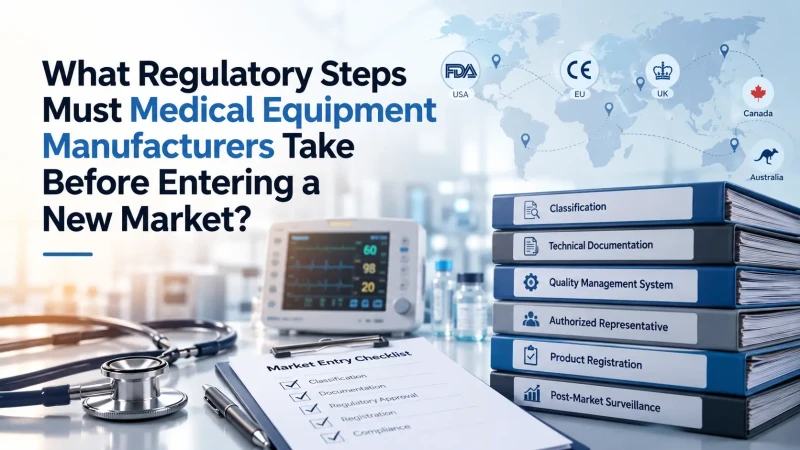
Medical equipment manufacturers cannot simply ship devices across borders. Before entering any new market, a manufacturer must confirm the product’s regulatory classification, prepare compliant technical documentation, appoint local representation where required, secure product registration, and establish post-market obligations. These steps vary by region, but the sequence is consistent across the United States, the European Union, and other major markets.
Regulatory approval in one country does not transfer to another. A device cleared by the FDA still needs separate registration in the EU, the UK, Canada, or Australia. The earlier regulatory planning is built into the market entry strategy, the fewer costly delays. Partners such as OMC Medical provide support on registration pathways and compliance documentation, but core responsibilities remain with the manufacturer.
The Regulatory Pathway Before Market Entry
Step 1: Confirm the Product Is a Medical
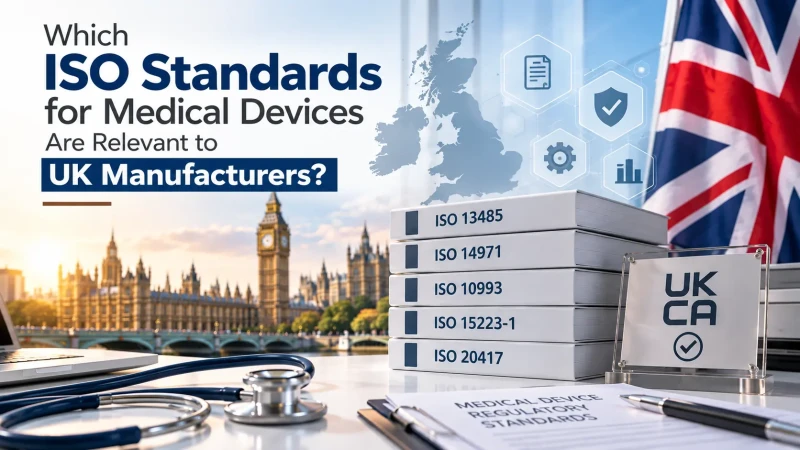
Many regulated markets require manufacturers to establish and maintain a quality management system. ISO 13485 is an internationally recognised standard for medical device quality management systems. The FDA's Quality Management System Regulation (QMSR), effective February 2, 2026, incorporates ISO 13485:2016 by reference, along with additional FDA requirements. Manufacturers should treat ISO 13485 and QMS Support as an ongoing operational function rather than a one-time certification project. Audits, supplier controls, corrective actions and management reviews are important elements of an effective quality management system.
Ready to Streamline Your Regulatory Compliance?
Join hundreds of companies who trust OMC Medical for their regulatory needs. Get expert guidance and ensure compliance across all markets.
Call Now +44 208 066 7260Step 2: Complete Medical Device Product Classification
Classification drives the conformity assessment route, the amount of clinical evidence required, and the level of regulatory scrutiny. The FDA uses Class I, II, and III, with Class III devices such as implantable pacemakers requiring premarket approval. The EU MDR uses Class I, IIa, IIb, and III, and the classification rules differ from the FDA’s. A device that is Class II in the US may be Class IIb or III in Europe. Getting Medical Device Product Classification wrong is one of the most common and expensive mistakes in market entry.
Medical Equipment Manufacturers should verify the classification requirements in every target market to ensure that the correct regulatory pathway is followed.
Step 3: Build the Technical Documentation
Regulators expect a structured file demonstrating safety and performance. In the EU, this is the Technical Documentation required under MDR Annex II and III. In the US, the equivalent is the design history file and the device master record, supported by the 510(k) or PMA submission. The file typically includes device description, intended purpose, risk management per ISO 14971, verification and validation data, labeling, and clinical evaluation. Weak or incomplete documentation is a frequent cause of rejected applications.
Step 4: Meet Quality System Requirements
Most regulated markets require a certified quality management system.ISO 13485 is one of the important ISO standards for medical devices, helping manufacturers establish and maintain an effective quality management system. , and it aligns with FDA’s Quality System Regulation. Manufacturers should treat ISO 13485 and QMS Support as an ongoing operational function, not a one-time certification project. Audits, supplier controls, corrective actions, and management review all fall under this umbrella.
Maintaining an effective quality management system is essential for medical equipment regulatory compliance, helping manufacturers maintain consistent product quality and meet applicable regulatory expectations. Manufacturers should also review the medical device certification requirements of their target markets, as the applicable standards and conformity assessment procedures may differ between jurisdictions.
Step 5: Appoint an Authorized Representative Where Required
Markets outside the manufacturer’s home country often require a local entity to act as the regulatory contact. In the EU, non-EU manufacturers must appoint an Authorized Representative established in a member state. The Authorized Representative holds the registration, communicates with competent authorities, and keeps the technical documentation available for inspection. Similar requirements exist in the UK, Switzerland, and several Middle Eastern and Asian markets.
Step 6: Complete Medical Device Product Registration
Registration is the formal act of listing the device with the relevant authority. In the US, most manufacturers register their establishment and list their devices with the FDA. In the EU, devices must be registered in the EUDAMED database once the relevant modules are fully functional. Some countries, including many in Latin America and the Gulf region, require separate national registration even after CE marking or FDA clearance. Medical Device Product Registration is therefore not a single event but a market-by-market obligation.
The medical device registration process should be planned according to the destination country's regulatory framework, device classification and applicable submission requirements.
Understanding the medical device approval process helps manufacturers identify the applicable regulatory pathway, submission requirements and assessments before entering a new market.
Step 7: Plan Post-Market Surveillance
Approval is not the end. Regulators require manufacturers to monitor device performance after launch. Post-Market Surveillance includes complaint handling, vigilance reporting, periodic safety updates, and, in the EU, a Post-Market Clinical Follow-up plan. The data gathered feeds back into risk management and can trigger field safety corrective actions. Companies that treat post-market obligations as an afterthought often face enforcement action later.
Medical Equipment Manufacturers must also establish effective post-market procedures to monitor device safety, address complaints and maintain regulatory compliance after market entry.

Regulatory Requirements Compared by Market
Practical Considerations That Affect Timelines
Medical device market entry requirements are not purely technical. Real-world timelines depend on factors regulators do not advertise. Notified body capacity in the EU has been a bottleneck since the MDR transition, and manufacturers should verify current review times before committing to launch dates. In the US, the difference between a well-prepared 510(k) and one that requires multiple rounds of additional information can be several months.
Language requirements also matter. Labels and instructions for use often need translation into the local language, and some authorities require in-country testing or local clinical data. Companies entering multiple markets should sequence their regulatory work so that documentation built for one market can be reused, with modifications, for the next.
A common mistake is treating medical device regulatory compliance as a paperwork exercise. Regulators increasingly inspect technical files and quality systems in depth, and they expect evidence, not assertions. Manufacturers that involve regulatory specialists early, maintain disciplined document control, and monitor regulatory changes in each target market tend to move faster than those that do not.
For manufacturers unsure where to start, a focused gap assessment against the target market’s requirements is the most useful first action. If the scope feels unmanageable, contact OMC for guidance on registration strategy and compliance documentation.