When Should Medical Device Companies Consider MDSAP?
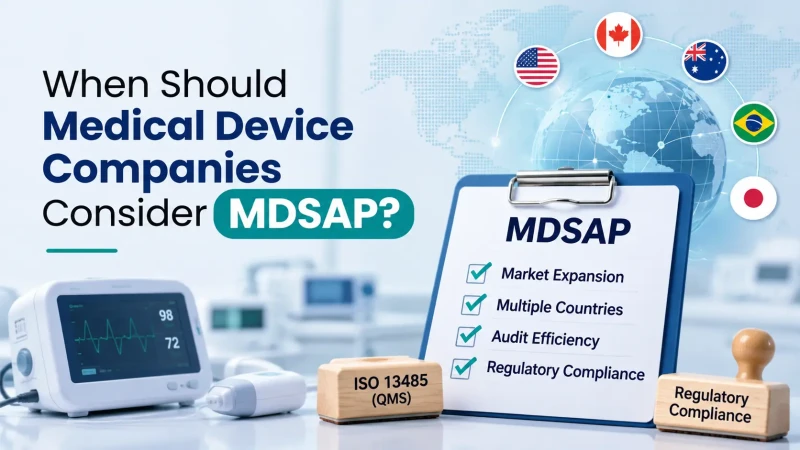
Medical device companies should consider MDSAP when they plan to sell products in multiple countries that accept the program, especially the United States, Canada, Australia, Brazil, and Japan. The Medical Device Single Audit Program replaces separate regulatory audits with one comprehensive assessment, reducing audit fatigue and streamlining market access. Timing matters as much as the decision. Companies such as OMC Medical often guide manufacturers through this calculation, but the underlying question is whether your current and future markets justify the commitment.
What MDSAP Actually Covers
MDSAP is not a separate quality system. It audits your existing quality management system against the requirements of the participating regulators, plus ISO 13485 and QMS Support elements specific to each country. The audit covers design, production, distribution, and post-market activities.
The program is administered by recognized auditing organizations, not the regulators directly. That distinction matters because the audit report goes to all participating authorities at once. A manufacturer in Texas producing orthopedic implants, for example, can use one MDSAP audit to satisfy regulatory expectations in Canada and Australia without hosting separate inspections from each.
When the Timing Makes Sense
The clearest trigger is market access. If your device is already registered in Canada or Australia, or you plan to enter those markets, MDSAP becomes relevant quickly. Health Canada requires MDSAP for most Class II, III, and IV device manufacturers. Australia’s Therapeutic Goods Administration accepts MDSAP reports as evidence of conformity assessment. Brazil’s ANVISA and Japan’s PMDA also recognize the program for certain device classes.
Ready to Streamline Your Regulatory Compliance?
Join hundreds of companies who trust OMC Medical for their regulatory needs. Get expert guidance and ensure compliance across all markets.
Call Now +44 208 066 7260Another trigger is audit burden. Companies with multiple ISO 13485 certificates and overlapping regulatory audits often find that consolidating into one MDSAP cycle reduces disruption. This is a practical consideration, not just a compliance one. Fewer audits means fewer production stoppages and fewer consultant engagements.
A third trigger is customer pressure. Distributors and hospital procurement teams increasingly ask for evidence of robust quality systems. An MDSAP certificate signals that your quality system passed scrutiny from multiple regulators, which can strengthen bids without revealing proprietary details.
When MDSAP May Not Be the Right Fit
Not every medical device company needs MDSAP. If you sell only in the United States and have no plans to export, FDA’s own quality system regulation remains the primary requirement. Adding MDSAP would duplicate effort without expanding market access.
Similarly, if your device falls outside the scope of participating regulators, the program offers little value. Low-risk Class I devices in Canada, for instance, may not require MDSAP certification. Companies should verify current requirements with each regulator before committing.
The program also requires ongoing resources. MDSAP audits are typically annual or biennial depending on your cycle, and the audit itself is more detailed than a standard ISO 13485 surveillance visit. Smaller companies with lean quality teams sometimes underestimate the preparation involved.
MDSAP Compared to Other Quality Pathways
MDSAP does not replace EU MDR requirements. The Quality Management System Requirements of EU MDR remain separate, and manufacturers selling in Europe still need Notified Body involvement. Likewise, MDSAP does not cover Medical Device Product Registration itself. You still file registrations with each country, but the audit evidence supports those filings.

Common Mistakes in MDSAP Planning
One frequent error is treating MDSAP as a documentation exercise. The audit examines implementation, not just procedures. Auditors review records, interview staff, and trace devices through the entire lifecycle. A polished quality manual does not compensate for incomplete device history records.
Another mistake is underestimating country-specific requirements. MDSAP includes jurisdiction-specific clauses that go beyond ISO 13485. For example, Brazil requires specific labeling and registration documentation, while Japan emphasizes design change controls. Companies that prepare only for ISO 13485 often miss these nuances.
A third error is poor timing. Starting MDSAP preparation weeks before the audit rarely works. Most manufacturers need several months to close gaps, train internal auditors, and complete a mock audit. Planning should begin at least one full quality cycle before the intended audit date.
How MDSAP Connects to Broader Quality and Regulatory Work
MDSAP fits within a larger Medical Device Quality Assurance framework. The audit findings can inform your corrective action system, supplier controls, and risk management processes. Companies that treat MDSAP as an isolated project miss the opportunity to strengthen the entire quality system.
The program also supports Global ISO Requirements alignment. Since MDSAP builds on ISO 13485, maintaining that certification remains foundational. MDSAP adds regulatory depth, but it does not replace the standard.
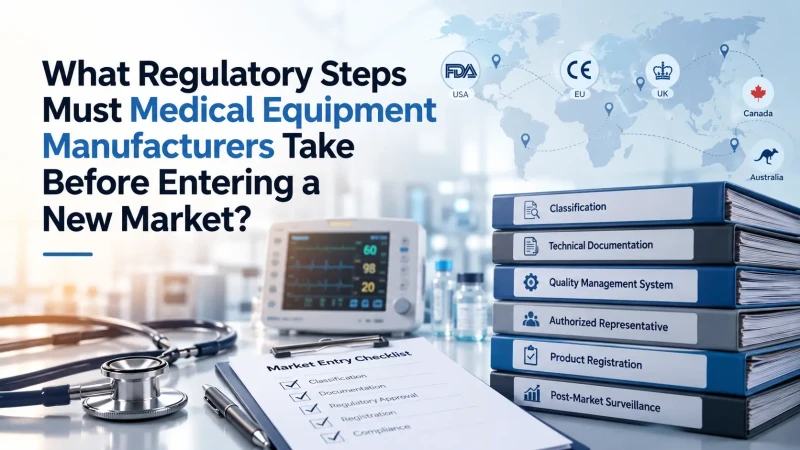
For manufacturers expanding internationally, MDSAP intersects with Regulatory Steps for Entering a New Market. The audit report can accelerate registration timelines in participating countries, but you still need local authorized representatives, labeling translations, and Post-Market and Vigilance procedures tailored to each jurisdiction.
Medical device regulatory compliance is not a one-time achievement. MDSAP certification requires ongoing surveillance audits and continuous improvement. Companies should view it as a long-term quality investment rather than a project with an endpoint.
Practical Next Steps
Start by mapping your current markets and your three-year expansion plan. If Canada, Australia, Brazil, or Japan appear on that list, MDSAP deserves serious evaluation. Review your existing ISO 13485 certification status and recent audit findings. Identify gaps against MDSAP jurisdiction-specific requirements, then build a remediation timeline.
Engage an auditing organization early for a pre-assessment or gap analysis. This is not a commitment to certification, but it provides a realistic picture of readiness and effort. Finally, align internal stakeholders from quality, regulatory, and operations. MDSAP affects documentation, training, and production processes, so cross-functional buy-in matters.
For manufacturers unsure whether MDSAP fits their market strategy, a focused consultation can clarify the trade-offs and sequencing. Contact OMC Medical to discuss your specific device portfolio and target markets.
Conclusion
MDSAP can be a valuable option for medical device companies planning to enter multiple participating markets and strengthen their regulatory compliance processes. However, the decision should depend on target markets, product classification, existing quality systems, and available resources. Evaluating these factors early helps manufacturers determine whether MDSAP aligns with their long-term regulatory and business goals.