Medical Device Distribution Sharjah: UAE Licensing and Compliance Requirements
For companies assessing medical device distribution Sharjah requirements, a commercial trade licence is only one part of the approval pathway. The business activity, regulated premises and products each need to be assessed separately before devices are imported, stored or supplied.
A distributor must also maintain suitable storage conditions, trace deliveries and manage complaints, returns and recalls. These responsibilities continue after the first shipment clears customs.
This guide focuses on distribution operations rather than repeating the full product registration dossier. Because service arrangements and application conditions can change, confirm the current requirements with the relevant authority before signing a warehouse lease or shipping stock.
Medical Device Distribution Licensing in Sharjah
Which authorities should a distributor approach?
The Emirates Drug Establishment (EDE) is the federal starting point for medical product regulation. Older guidance may refer to MOHAP, but distributors should check the current EDE service route rather than assume that a legacy application process still applies.
Ready to Streamline Your Regulatory Compliance?
Join hundreds of companies who trust OMC Medical for their regulatory needs. Get expert guidance and ensure compliance across all markets.
Call Now +44 208 066 7260For a mainland business, the Sharjah Economic Development Department (SEDD) is the starting point for commercial licensing. A free zone business should approach its own licensing authority.
Do not assume that Sharjah Health Authority is the licensing authority for every device distributor. Any healthcare-facility or location-specific permission that applies to a particular operation does not replace federal product and establishment approvals.
Commercial trade licence: permission for the business activity
A commercial licence establishes the business and identifies its permitted activities. The approved wording must cover what the company actually intends to do, such as trading, importing or distributing the relevant products.
A Medical Device Distributor Licence Sharjah enquiry should therefore start with an activity check, not simply a company formation package. A general trading activity should not be treated as confirmation that regulated medical device operations are permitted.
Establishment or warehouse licence: permission for regulated operations
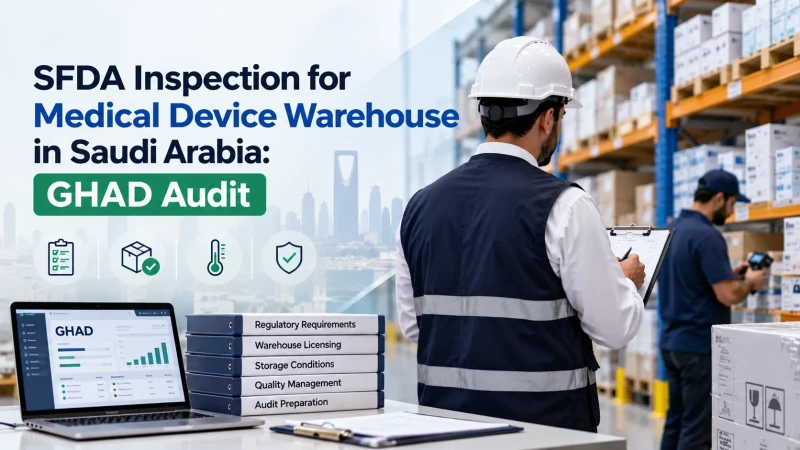
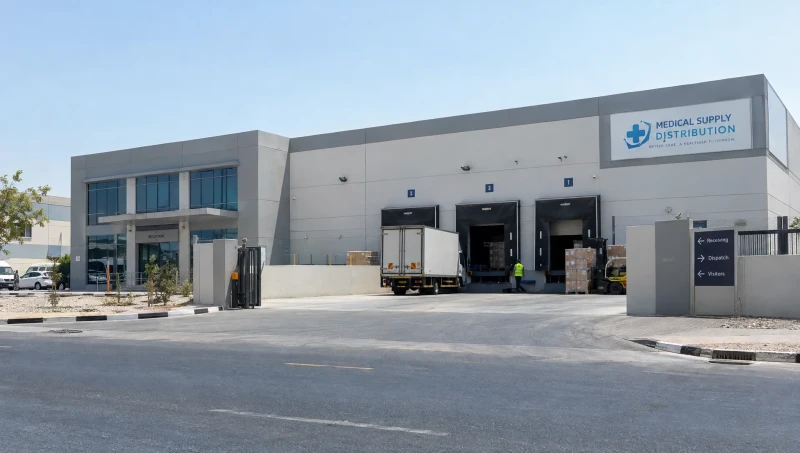
The establishment or medical warehouse approval concerns the operating entity, premises and authorised activities. It is separate from the commercial licence and can involve assessment of storage arrangements, technical responsibility, procedures and inspection readiness.
A warehouse lease, customs registration or commercial licence does not by itself establish that a site is approved to hold medical devices.
Federal marketing authorization: permission for the product
Product authorization concerns the device, not just the company selling it. Confirm the applicable EDE registration or authorization pathway, the authorized applicant and whether any specific exemption applies before supply.
OMC Medical’s guide to UAE medical device registration explains the product-level process. For distribution planning, the essential distinction is that an approved company cannot automatically supply an unauthorized device, and an authorized device cannot automatically be handled by any trader.
Sharjah Mainland vs. Free Zone Distribution
The right business location depends on the intended sales route. A company supplying Sharjah hospitals directly has different operational needs from a business storing goods for re-export.
| Issue | Sharjah mainland | Sharjah free zone |
|---|---|---|
| Commercial licensing authority | SEDD, with other approvals where applicable | The relevant free zone authority |
| Permitted activities | Must match the approved mainland licence | Must match the activities accepted by the zone |
| UAE mainland supply | Requires the appropriate commercial, regulatory and customs arrangements | Requires a lawful mainland supply route; a zone licence alone does not establish that right |
| Regulated storage | Confirm EDE requirements for the premises and activity | Confirm both zone permissions and applicable EDE requirements |
| Customs movement | Arrange the appropriate importer and clearance process | Distinguish free zone storage, re-export and release into the mainland |
| Product authorization | Assess the applicable federal requirements before supply | Do not assume free zone status removes federal requirements |
Before selecting premises, obtain confirmation that the location and activity are acceptable for the proposed regulated operation. A logistics facility marketed as suitable for healthcare products is not necessarily an approved medical warehouse.
Medical Device Licensing in Sharjah should be planned around the actual movement of goods: who imports, who stores, who invoices the customer and who releases the stock. If these are different entities, their responsibilities should be documented.
Medical Warehouse Licensing Requirements under EDE
For medical device distribution in Sharjah, warehouse suitability should be assessed before fit-out expenditure. Ask EDE which establishment service applies to the proposed activities and whether the planned premises are eligible.
The governing framework should also be checked through the UAE’s official legislation portal, including Federal Decree-Law No. 38 of 2024 concerning medical products, the pharmacy profession and pharmaceutical establishments, together with applicable implementing requirements.
What should be prepared before application or inspection?
The exact submission depends on the current service conditions. A practical preparation file should address:
- Business and premises: Legal entity details, proposed activities, occupancy documents and an appropriate site layout.
- Technical responsibility: The responsible professional and qualifications accepted for the establishment’s authorised scope.
- Storage arrangements: Receiving, released stock, quarantine, returns and recalled or rejected goods.
- Environmental controls: Monitoring and equipment appropriate to the devices’ labelled storage conditions.
- Operating procedures: Receipt, stock release, dispatch, transport, complaints, recalls and record control.
- Inspection readiness: Evidence that the documented arrangements are implemented at the site.
These are preparation areas, not a substitute for EDE’s current application checklist. Do not assume that every medical device warehouse requires identical staffing, equipment or environmental conditions.
Medical Device Warehousing in Sharjah also requires change control. Before moving premises, changing the responsible person, adding activities or using another storage location, establish whether notification or prior approval is required.
Medical Device Storage and Transportation Compliance
Storage controls should follow the manufacturer’s instructions and the conditions supporting the device’s authorization. Not every device requires refrigeration, and an air-conditioned room is not evidence that all storage requirements are met.
How should storage conditions be controlled?
Establish the conditions required for each product group, including temperature, humidity, protection from light or other relevant restrictions. Monitoring should be suitable for the risk, with calibrated equipment where measurement accuracy matters.
Use environmental assessment or mapping where needed to establish whether storage conditions remain suitable across the space. Keep records of excursions, affected stock and the decision on whether that stock can be released.
Segregate stock by status. Returned, damaged, expired or recalled devices should not be available for ordinary picking. For products with expiry dates, stock rotation should account for the remaining shelf life and customer requirements.
Who controls the transport handover?
An approved warehouse does not make every delivery route suitable. Define transport conditions, packaging protection, carrier responsibilities and the evidence needed at delivery.
Where controlled temperatures are required, assess the route and packaging arrangement rather than relying only on a vehicle’s cooling system. Contracts should explain how delays, damaged packaging and temperature excursions are reported.
Third-party logistics arrangements need particular care. Confirm that the provider’s premises and activities are appropriately authorized, and document who controls stock release, records and incident escalation. Outsourcing logistics does not make these responsibilities disappear.
Distributor Responsibilities for Traceability, Complaints and Recalls
Traceability: can affected stock be located?
A distributor should be able to connect incoming stock with its supplier and outgoing stock with its customer. Capture product identifiers, quantities, receipt and dispatch dates and batch, lot or serial details as applicable.
Records should support targeted action when a manufacturer identifies an affected batch or serial-number range. Establish the applicable retention period rather than selecting one for administrative convenience.
Where relevant, align product identification records with the applicable UAE UDI requirements. OMC Medical’s explanation of UAE UDI for medical devices covers that subject separately; the distribution priority is keeping identifiers connected to actual stock movements.

Complaints: what must be escalated?
Complaints may arrive through sales staff, delivery drivers or customer service, not only through a quality department. Train these teams to recognize potential safety issues and forward them promptly to the designated responsible person.
The complaint process should capture the device identity, issue, affected quantity and any reported patient or user impact. Document escalation to the manufacturer or authorized regulatory contact and determine whether authority reporting is required under the applicable rules.
For teams engaging an AI workflow automation agency to route incoming complaints or flag missing records, define access controls, audit trails and human review before deployment. Automated routing must not replace qualified decisions about reportability or corrective action.
Recalls: can distribution be stopped quickly?
A workable recall procedure connects the manufacturer, relevant regulatory parties, warehouse and customers. It should support blocking affected stock, identifying recipients, issuing approved communications and reconciling returned or corrected units.
Test the process periodically. A mock recall can reveal missing customer details or stock records before an actual safety action occurs.
Keep recalled goods under controlled status until their disposition is authorized. Record the outcome, including reconciliation gaps and follow-up actions.
Local Representation, Classification and Post-Market Compliance
A foreign manufacturer’s regulatory representative, the authorized applicant, importer and distributor are not automatically the same party. Confirm which entity holds each role and which appointments and importer arrangements EDE requires for the particular pathway.
A commercial distribution agreement should not be assumed to establish regulatory representation. OMC Medical’s guide to the UAE authorized representative’s roles and requirements explains this distinction in more detail.
Risk classification also affects the product’s authorization route and supporting evidence. Confirm the classification accepted under EDE’s current requirements using the intended purpose and applicable rules. Do not assign a class solely from a product name or automatically transfer an overseas classification.
Post-market arrangements should identify who receives safety information, evaluates complaints, communicates with EDE and implements corrective actions. The distributor’s agreement should make these handovers explicit, including after a supplier relationship ends.
Common Compliance Challenges for Medical Device Distributors in Sharjah
Most distribution problems arise at the boundaries between permissions and responsibilities, rather than from one missing document.
| Common challenge | Practical response |
|---|---|
| The commercial licence does not match the actual activity | Confirm activity wording before company formation or licence amendment |
| Warehouse premises are leased before regulatory suitability is checked | Obtain authority confirmation before committing to the site |
| Free zone approval is treated as permission for unrestricted mainland sales | Document the importer, customs route and lawful mainland supply arrangement |
| A logistics provider holds stock without clearly allocated responsibilities | Verify authorization and establish a written quality agreement |
| Product authorization details do not match the supplied configuration | Check models, variants, manufacturer details and authorization scope before release |
| Complaint and recall duties are unclear | Assign named contacts, escalation routes and access to distribution records |
The Sharjah Medical Device Regulatory Requirements relevant to a business should be translated into operational controls, not left as a collection of certificates.
A practical medical device distribution Sharjah readiness review should connect each product with its authorization, each activity with its licence and each stock movement with a responsible entity. Resolve gaps before the first commercial shipment, not during customs clearance or a customer audit.
Frequently Asked Questions
What are the requirements for medical device registration in the UAE? The applicable EDE pathway generally requires an eligible applicant, manufacturer authorization and supporting evidence addressing the device’s identity, intended purpose, quality, safety and performance. The exact dossier depends on the device and current service requirements. Product registration is separate from the distributor’s commercial and establishment permissions.
What are the regulatory requirements for medical devices? They include the applicable product authorization, appropriately licensed business activities and premises, suitable storage and transport, traceability and post-market controls. The manufacturer, representative, importer and distributor must establish which obligations apply to their respective roles.
Which licence is required for medical devices? There is no single licence covering every situation. A Sharjah distributor needs the appropriate commercial activity and any required regulated establishment or warehouse approval. Product authorization and shipment-specific import requirements must be assessed separately.
What are the classification rules for medical devices in the UAE? Classification follows the rules accepted under the current EDE framework. Intended use, invasiveness, duration of use and other relevant risk characteristics inform the assessment. In vitro diagnostic devices require the applicable diagnostic-device approach. Confirm the class and submission route rather than assuming an overseas class transfers automatically.
Can a Sharjah free zone company distribute medical devices across the UAE? A free zone licence alone does not confirm unrestricted mainland distribution rights. The company must establish the permitted commercial route, appropriate importing arrangements, applicable EDE approvals and customs requirements before mainland supply.
Conclusion: Confirm the Route Before Moving Stock
Medical device distribution in Sharjah requires aligned business licensing, regulated premises, product authorization and dependable post-market controls. Mainland or free zone incorporation is only the starting point.
OMC Medical can support product classification, registration planning, technical documentation and authorized representative requirements. Contact the team to assess how your proposed Sharjah distribution model fits the applicable UAE regulatory pathway before committing to premises or shipments.