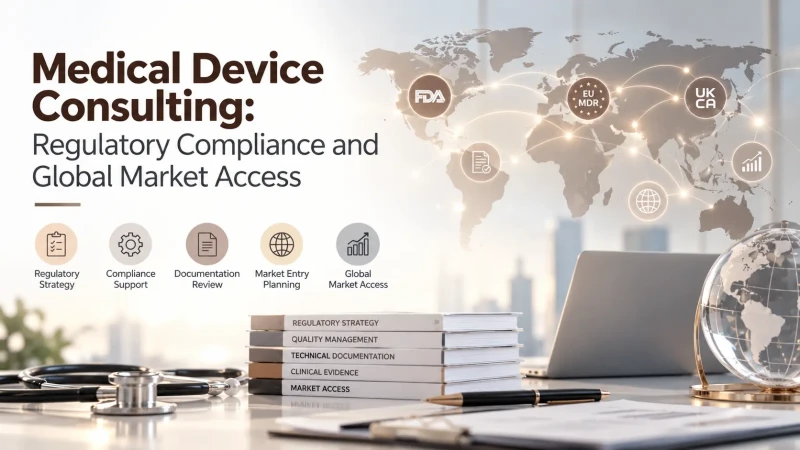
Medical device consulting helps manufacturers navigate regulatory approvals, quality management systems, design controls, and clinical requirements to bring safe products to market. A consultant bridges your product development team and the regulatory bodies deciding whether your device can be sold in a given country.
For companies working across multiple jurisdictions, the value goes beyond paperwork. A medical device consulting partner can identify which market entry pathway makes sense for your device class, flag documentation gaps before they become submission delays, and coordinate parallel registrations so a launch in one region does not stall progress in another. OMC Medical provides this cross-market regulatory support, with particular depth in registration projects spanning Europe, the UK, the US, and emerging markets.
What Medical Device Consulting Actually Covers
Scope varies by project stage, but most engagements fall into a few practical categories.
Regulatory Strategy and Pathway Selection
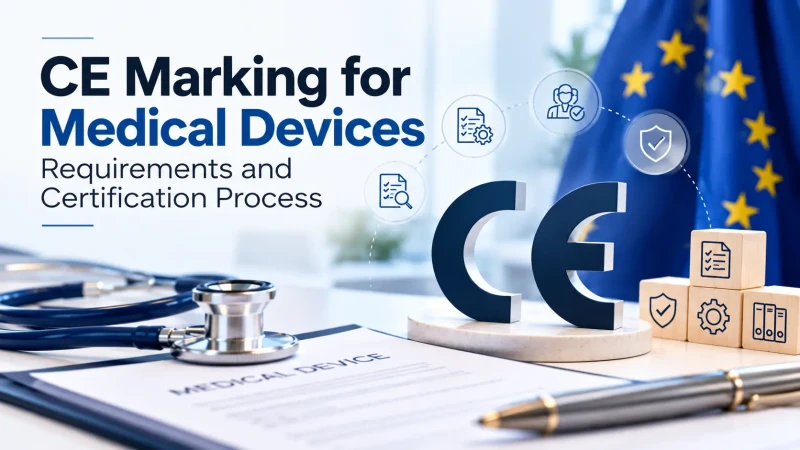
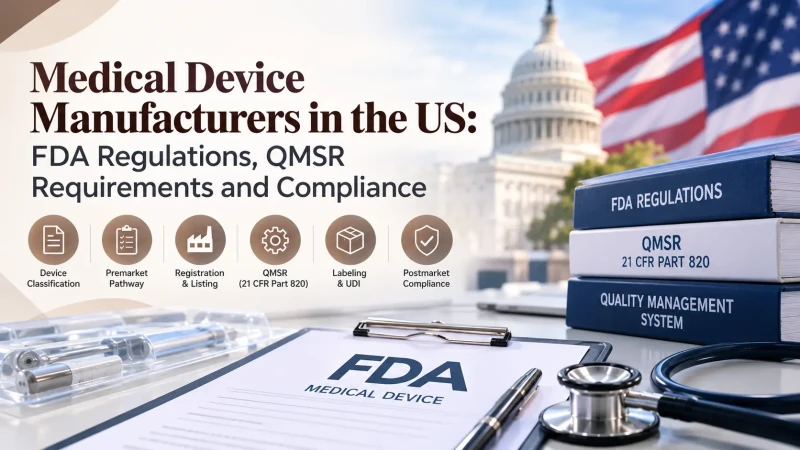
Before any submission, a consultant reviews the device’s intended use, technology, and risk classification to determine whether a 510(k), De Novo, PMA, or a non-US pathway such as UKCA or CE marking under MDR is appropriate. This is not one-size-fits-all: a software-based diagnostic tool follows a different route than a Class II mechanical instrument, and the same device may be classified differently in the US, Canada, and Australia.
Ready to Streamline Your Regulatory Compliance?
Join hundreds of companies who trust OMC Medical for their regulatory needs. Get expert guidance and ensure compliance across all markets.
Call Now +44 208 066 7260Consultants also help with Medical device product registration planning, confirming the correct device grouping, identifying applicable standards, and sequencing submissions to avoid redundant testing.
Quality Management and Compliance Readiness
A functioning quality management system is the foundation for most regulatory approvals. Consultants support ISO 13485 implementation, internal audits, and remediation after audit gaps. Medical device quality assurance work often overlaps with design controls: ensuring risk management files, verification and validation records, and supplier controls are complete enough to withstand scrutiny during a technical review or inspection.
Documentation and Technical File Support
Submissions depend on well-organised technical documentation. Consultants review existing files against the target market’s requirements, identify missing elements, and help draft or revise content. Medical device technical documentation typically includes device description, intended use, design and manufacturing information, risk analysis, clinical evaluation, and labelling. A consultant ensures the documentation tells a coherent story a reviewer can follow.
Post-Market Obligations
Market access does not end at approval. Manufacturers must maintain post-market surveillance and vigilance activities, including complaint handling, adverse event reporting, and periodic safety updates. Consultants can set up these systems early so post-market data collection aligns with the clinical evidence strategy used in the original submission.
When to Bring In a Consultant
Not every company needs full-service consulting at every stage. Common triggers include:
Entering a new regulatory market for the first time
Facing a regulatory decision with multiple possible pathways
Recovering from a failed audit, warning letter, or rejected submission
Lacking in-house expertise for a specific standard, such as ISO 14971 or IEC 62304
Needing temporary capacity during a submission-heavy period
Early involvement is more cost-effective than late-stage remediation. A consultant reviewing regulatory strategy before design freeze can prevent expensive rework of testing or documentation.
Choosing a Consulting Partner
The right partner depends on your device, target markets, and the specific gap you need to fill. The table below compares common selection criteria and why each matters.
Red flags include consultants who promise guaranteed approval timelines, recommend the most complex pathway without justification, or cannot explain how their approach fits your device’s risk class. Experienced consultants are honest about uncertainty and regulatory variability.

Typical Deliverables
A well-scoped engagement should produce tangible outputs: a regulatory gap assessment comparing current documentation against target market requirements, a compliance roadmap with milestones and dependencies, technical file reviews with written findings, and registration project coordination across multiple countries.
OMC Medical regulatory services follow this pattern, emphasising clear documentation and coordinated submissions rather than isolated advice. For manufacturers with an internal regulatory team, a consultant can act as a second reviewer, catching issues before they reach a notified body or competent authority.
Common Mistakes Manufacturers Make
The most frequent mistake is treating regulatory strategy as an afterthought: companies complete product development, then discover the design history file lacks submission-required traceability. Another error is assuming one technical file works everywhere; requirements differ enough between the FDA, EU MDR, UKCA, and other frameworks that documentation usually needs country-specific adjustments.
A third mistake is underestimating post-market obligations. Manufacturers sometimes budget only for initial approval and then struggle to maintain compliance once the device is on the market. Building post-market surveillance and vigilance into the original plan avoids this.
Moving Forward
If you are planning a new submission, expanding into additional markets, or addressing a compliance gap, start by mapping your current documentation against each target jurisdiction’s requirements. Identify the largest gaps first, then decide whether internal resources can close them or whether external medical device consulting support makes more sense.
For manufacturers seeking regulatory consulting support across multiple markets, contact OMC Medical to discuss your device, target countries, and current compliance status.