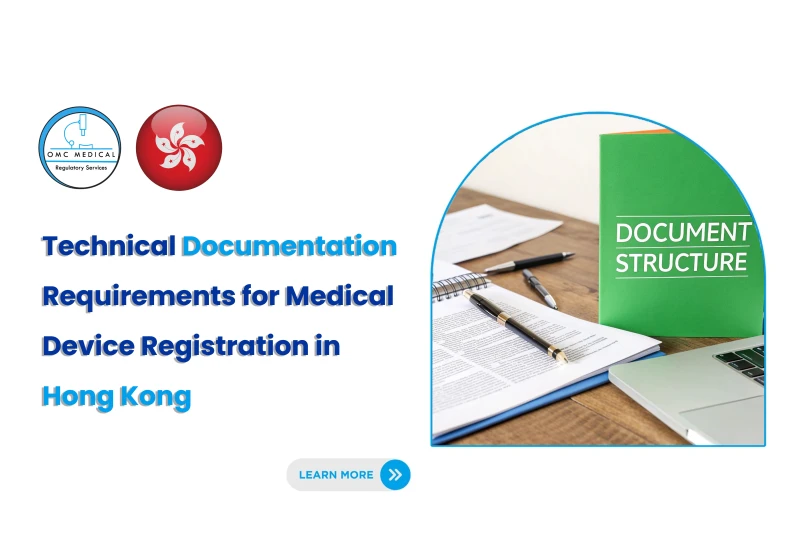
Entering the Hong Kong medical device market requires more than product approval in other countries. Manufacturers must prepare accurate and complete technical documentation to support compliance under the Medical Device Administrative Control System (MDACS).
Whether you are registering a Class II, III, or IV medical device, strong technical documentation plays a critical role in demonstrating the safety, performance, and quality of your product.
OMC Medical helps manufacturers prepare, review, and organize technical files for successful Hong Kong medical device registration. From classification support to submission readiness, our regulatory experts simplify the complete process.
What is Technical Documentation for Hong Kong Medical Devices?
Technical documentation refers to the complete set of records and evidence that demonstrate a medical device complies with applicable safety, quality, and performance requirements under Hong Kong MDACS regulations.
The technical file typically includes device descriptions, intended use, design information, risk management documents, clinical evidence, labeling, manufacturing information, quality management certificates, and validation reports.
Ready to Streamline Your Regulatory Compliance?
Join hundreds of companies who trust OMC Medical for their regulatory needs. Get expert guidance and ensure compliance across all markets.
Call Now +44 208 066 7260Manufacturers must maintain these documents throughout the product lifecycle and update them whenever significant changes occur.
Why Technical Documentation is Important in Hong Kong
Incomplete or poorly structured documentation is one of the most common reasons for delays during medical device registration.
Proper technical documentation helps demonstrate product safety and effectiveness, supports faster MDACS review, reduces regulatory queries, ensures compliance with international standards, and improves market access opportunities.
Technical Documentation Requirements Under MDACS
1. Device Description and Product Overview
Manufacturers must provide detailed information about the medical device, including product name, device classification, intended purpose, principles of operation, accessories, target users, and device photographs or diagrams.
Clear product descriptions help regulators understand how the device functions and where it will be used.
2. Essential Principles Compliance
Manufacturers must demonstrate compliance with applicable Essential Principles of Safety and Performance.
This may include evidence related to biocompatibility, electrical safety, sterility, software validation, packaging validation, usability engineering, and mechanical performance.
Supporting standards such as ISO and IEC standards are commonly referenced.
3. Risk Management Documentation
Risk management files are critical for Hong Kong medical device submissions.
Manufacturers should provide documentation prepared according to ISO 14971, including hazard identification, risk analysis, risk control measures, residual risk evaluation, and benefit-risk assessment.
Regulators expect manufacturers to demonstrate that identified risks are minimized and acceptable.
4. Clinical Evidence and Performance Data
Clinical evidence supports the safety and effectiveness of the device.
Depending on the product type, manufacturers may need clinical evaluation reports, published literature, clinical investigation data, performance testing reports, and equivalence comparisons.
For innovative or higher-risk devices, additional evidence may be requested.
5. Quality Management System Documentation
Manufacturers are generally expected to maintain a recognized Quality Management System such as ISO 13485.
Typical QMS documents include ISO 13485 certificates, manufacturing process overviews, supplier controls, CAPA procedures, complaint handling procedures, and change control processes.
Strong quality management documentation improves regulatory confidence during review.
6. Labeling and Instructions for Use (IFU)
Hong Kong regulators carefully review labeling content to ensure user safety.
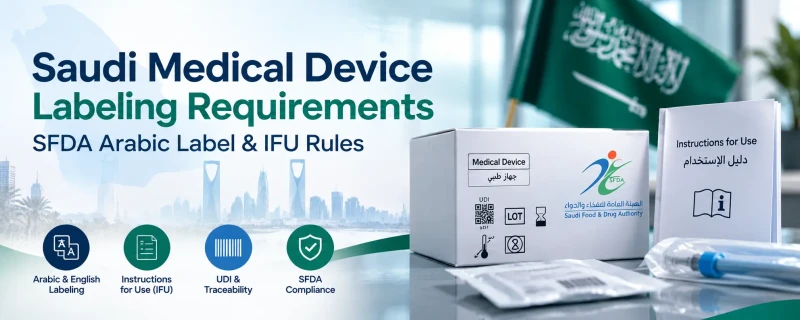
Manufacturers should provide product labels, packaging artwork, Instructions for Use (IFU), warnings and precautions, storage conditions, and Local Responsible Person (LRP) information.
All labeling should be clear, accurate, and consistent with the device’s intended use.
7. Software and Cybersecurity Documentation
For software-based medical devices and Software as a Medical Device (SaMD), additional technical information may be required.
This may include software architecture, verification and validation reports, cybersecurity controls, software lifecycle documentation, usability testing, and version control information.
As digital health technologies continue to expand in Hong Kong, software documentation requirements are becoming increasingly important.
Common Challenges Manufacturers Face
Many manufacturers encounter regulatory delays because of missing test reports
incomplete risk analysis
inconsistent labeling
poorly organized technical files
lack of clinical evidence
outdated certificates
missing declarations of conformity.
Working with experienced regulatory consultants can significantly reduce these issues and improve submission quality.
How OMC Medical Supports Technical Documentation Compliance
OMC Medical provides end-to-end support for Hong Kong medical device registration and technical documentation preparation.
Our regulatory experts help manufacturers prepare Hong Kong technical files
review documentation gaps
align files with MDACS requirements
support device classification
coordinate with Local Responsible Persons (LRPs)
assist with ISO 13485 compliance
manage submission documentation.
We work with manufacturers worldwide to simplify market entry into Hong Kong and other global medical device markets.
Best Practices for Preparing Hong Kong Technical Documentation
To improve registration success, manufacturers should maintain updated technical files, use internationally recognized standards, ensure consistency across all documents, conduct proper risk management, keep clinical evidence current, regularly review labeling compliance, and maintain strong quality systems.
Well-prepared documentation not only supports regulatory approval but also strengthens long-term compliance management.
Conclusion
Technical documentation is the foundation of successful medical device registration in Hong Kong. Manufacturers must provide clear, complete, and well-structured evidence demonstrating product safety, quality, and performance under MDACS requirements.
With increasing regulatory expectations, partnering with experienced regulatory professionals can help streamline the process and reduce approval delays.
OMC Medical supports manufacturers with comprehensive Hong Kong regulatory services, including technical documentation preparation, compliance reviews, LRP support, and medical device registration assistance.