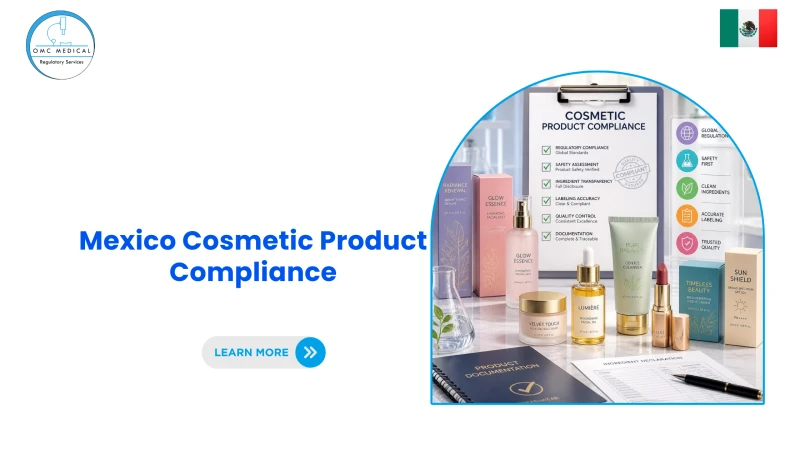
Mexico does not require pre-market registration for cosmetic products—but treating this as "no regulatory process" would be a mistake. While COFEPRIS (Comisión Federal para la Protección contra Riesgos Sanitarios) does not issue a sanitary registration for cosmetics before they are placed on the market, manufacturers and importers must still comply with requirements covering product classification, ingredients, labeling, Good Manufacturing Practices (GMP), and establishment obligations. In practice, products that fail to meet these requirements may face customs delays, enforcement actions, or post-market regulatory scrutiny.
Why "No Registration" Doesn't Mean "No Risk"
Unlike many markets that require a regulatory review before a cosmetic product is commercialized, Mexico relies primarily on compliance with applicable legislation, inspections, customs controls, and post-market surveillance. This means regulatory issues—such as labeling deficiencies, incorrect product classification, or documentation inconsistencies—may only become apparent during importation or after products have entered the market. Preparing compliance documentation before shipping is therefore just as important as in countries with formal pre-market registrations.
What Actually Counts as a Cosmetic in Mexico
Under Mexico's General Health Law, cosmetics are products intended to be applied to the external parts of the human body—including the skin, hair, nails, lips, teeth, and oral cavity—for purposes such as cleansing, perfuming, beautifying, protecting, maintaining them in good condition, or modifying appearance.
The distinction between a cosmetic and a medicinal product is particularly important. Products that claim to diagnose, treat, prevent, or cure disease—or otherwise imply a therapeutic effect—may fall outside the cosmetic category and become subject to pharmaceutical regulations. For this reason, reviewing product claims is one of the first compliance steps before entering the Mexican market.
Ready to Streamline Your Regulatory Compliance?
Join hundreds of companies who trust OMC Medical for their regulatory needs. Get expert guidance and ensure compliance across all markets.
Call Now +44 208 066 7260The Notice of Operation: The Real Procedural Step
Although cosmetic products themselves do not require pre-market registration, Mexican establishments carrying out regulated cosmetic activities generally must submit an Aviso de Funcionamiento (Notice of Operation) to COFEPRIS before beginning operations. This filing applies to the establishment—not to individual cosmetic products—and allows COFEPRIS to identify regulated businesses operating in Mexico.
Depending on the business model, this obligation is typically handled by the Mexican manufacturer, importer, or other locally established entity responsible for carrying out the regulated activity.
Local Representation Is Mandatory
Foreign manufacturers typically access the Mexican market through a locally established importer, distributor, or subsidiary that assumes responsibility for importation and compliance with applicable Mexican regulations. The local entity is responsible for meeting establishment obligations, coordinating with customs where applicable, and interacting with COFEPRIS during inspections or regulatory inquiries.
Although Mexican law does not require foreign cosmetic manufacturers to appoint a specific "authorized representative" comparable to those required in some other jurisdictions, having an experienced local regulatory partner can significantly simplify market entry and ongoing compliance.
Ingredient Compliance
Cosmetic ingredients must comply with the requirements of Mexico's General Health Law and other applicable regulations. Manufacturers should verify that product formulations do not contain prohibited substances, comply with applicable restrictions, and remain consistent with the intended cosmetic classification. Reformulation may be necessary if ingredients or product claims place the product outside the cosmetic regulatory framework.
Good Manufacturing Practices (GMP)
Cosmetic products marketed in Mexico are expected to be manufactured in accordance with GMP. COFEPRIS recognizes NOM-259-SSA1-2022, which establishes GMP requirements for cosmetic products and helps ensure product quality, consistency, and safety throughout manufacturing.
Animal Testing Ban
Mexico prohibits cosmetic animal testing and also prohibits the manufacture, importation, and commercialization of cosmetic products whose ingredients or finished products were tested on animals, in accordance with amendments to the General Health Law. Companies placing cosmetics on the Mexican market should ensure their products comply with these requirements throughout product development and commercialization.
Labeling: Where Most Real-World Delays Actually Happen
Labeling for pre-packaged cosmetics must follow NOM-141-SSA1/SCFI-2012, with all content in Spanish, including truthful, verifiable information; the product's general and specific names; the name and contact information of the person responsible for the product; batch number; instructions for use; commercial information per NOM-008-SCFI-2002 (General System of Measurement Units); sanitary information; and ingredients listed in descending order of predominance.
In practice, incomplete translations and small labeling errors are among the most frequent causes of customs holds—experienced companies treat labeling as a critical compliance step requiring careful review, not a final, low-risk formality to handle last.
Adverse Event Reporting
Manufacturers, importers, and marketers must promptly notify COFEPRIS of any adverse events or reactions linked to cosmetic product use—an ongoing obligation that continues after market entry, not a one-time pre-launch consideration.
How OMC Medical Can Help
OMC Medical manages the Notice of Operation filing and local representation requirements for cosmetic manufacturers entering Mexico, reviews product claims to confirm cosmetic (not drug) classification, and specifically focuses on NOM-141 labeling compliance given how frequently labeling errors—not registration gaps—cause real-world customs delays.