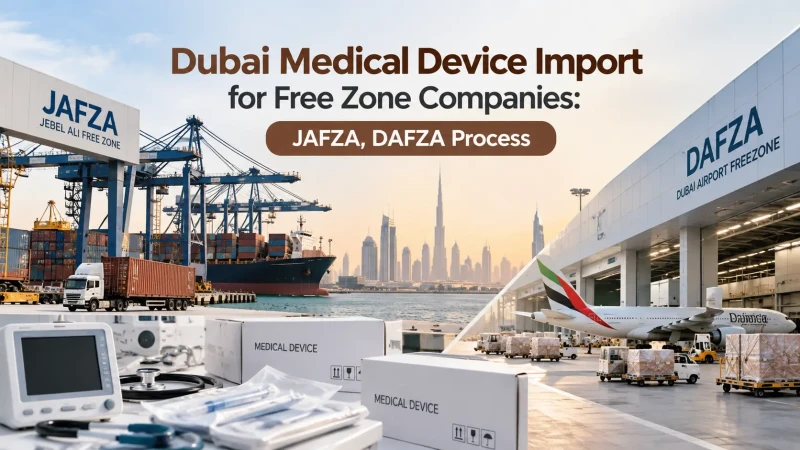
Dubai Free Zone Medical Device Import for JAFZA and DAFZA Companies
Dubai free zone medical device import is a practical route for companies that want to bring devices into Dubai for warehousing, regional distribution, re-export or later supply into the UAE mainland. The process is not only a logistics exercise. It sits at the intersection of free zone licensing, Dubai Customs procedures, MOHAP medical device registration requirements and the commercial model used by the manufacturer, importer or distributor.
For companies operating in Jebel Ali Free Zone (JAFZA) or Dubai Airport Freezone (DAFZA), the key question is usually simple: can we import medical devices into the free zone, store them there and then move them to customers in the UAE or other countries? The answer depends on the intended movement of goods. Import into a free zone, re-export from a free zone and placing products on the UAE mainland are related but separate compliance pathways.
This guide explains the JAFZA and DAFZA process at a practical level, including company setup, licensing, product registration, importer obligations, customs clearance, warehouse considerations, mainland movement and re-export planning.
What is Dubai free zone medical device import?
Dubai free zone medical device import generally means bringing medical devices from outside the UAE into a customs-controlled free zone in Dubai under a licensed free zone company. The goods may be stored, consolidated, repacked where permitted, re-exported to another country or transferred into the UAE mainland after the relevant customs and regulatory conditions are met.
Ready to Streamline Your Regulatory Compliance?
Join hundreds of companies who trust OMC Medical for their regulatory needs. Get expert guidance and ensure compliance across all markets.
Call Now +44 208 066 7260A free zone is not the same as the UAE mainland market. Goods can enter a free zone for logistics purposes, but that does not automatically mean the device can be sold, supplied, installed or used in hospitals, clinics or pharmacies in the UAE. Mainland supply typically requires a UAE-compliant regulatory pathway, including MOHAP requirements where applicable.
In practice, companies should separate three questions before shipping goods:
Is the company licensed in the correct free zone activity for medical device trading, storage or distribution?
Is the product allowed to enter the free zone, and are any health authority approvals needed for the specific shipment or intended use?
Will the goods remain in the free zone, be re-exported or be released into the UAE mainland?
This distinction is central to Dubai free zone medical device regulations because free zone logistics and medical device market authorization do not serve the same legal purpose.
How does medical device import work in JAFZA?
JAFZA sits next to Jebel Ali Port, one of the region's major sea freight and logistics hubs. This makes JAFZA medical device import especially relevant for companies receiving containerized shipments, holding regional stock or serving GCC, Middle East, Africa and Asia markets through re-export.
A typical JAFZA model involves a company licensed by Jebel Ali Free Zone Authority, with a permitted business activity that matches the intended operations. For medical devices, this may involve trading, distribution, warehousing or related activities, depending on the product portfolio and operating model. Companies should confirm the exact licensed activity with JAFZA before importing regulated products.
From a customs perspective, shipments are usually declared through Dubai Customs using the relevant free zone import declaration process. Dubai Customs may require standard commercial documents such as invoice, packing list, transport document and other documents depending on origin, HS classification, product type and shipment purpose. For regulated healthcare products, customs clearance can also depend on evidence that the goods meet applicable UAE health authority requirements.
If goods are only entering JAFZA for storage and onward re-export, the regulatory pathway may be different from goods intended for UAE mainland distribution. However, companies should not assume that free zone status removes all medical device controls. Customs, free zone authorities and health authorities can request documents depending on the device type, risk profile and intended movement.
For a broader explanation of how Dubai import licensing connects with product registration and local responsibilities, OMC Medical's guide to Dubai medical device import licensing provides useful context.
How does medical device import work in DAFZA?
DAFZA is located next to Dubai International Airport, so it is commonly used for air freight, urgent shipments, high-value devices and regional distribution models that depend on fast movement. DAFZA medical device import can be suitable for smaller shipments, spare parts, diagnostic equipment, high-value instruments or devices that require quicker turnaround than ocean freight.
The commercial foundation is similar to JAFZA. The company needs a DAFZA license with activities that support the proposed medical device business. The business activity should align with import, export, distribution, storage or trading functions. If the company plans to hold inventory, the lease, warehouse arrangements and operational setup should be suitable for the device category and storage conditions.
At shipment level, goods arriving by air are cleared through Dubai Customs procedures linked to the free zone. The importer, freight forwarder or customs broker will normally prepare the declaration and supporting documents. Where the shipment includes regulated medical devices, the company should be ready to provide product information, registration status or authority approvals where required.
DAFZA can be useful for re-export-focused businesses, but the same principle applies: entry into the free zone is not the same as authorization to market the device in the UAE. If goods later move from DAFZA into Dubai mainland or another UAE emirate, the company must address mainland customs clearance and applicable medical device import requirements in Dubai and the wider UAE.
Key requirements for importing medical devices through Dubai free zones
Dubai free zone medical device import usually requires coordination between company licensing, customs registration, product compliance and distribution planning. The exact requirements depend on the device, risk classification, origin, intended destination and whether the product will be commercialized in the UAE.
Company setup and free zone licensing
A free zone company should have a valid license issued by the relevant authority, such as JAFZA or DAFZA. The activity on the license should reflect the intended business. A general trading setup may not always be sufficient for regulated medical products, so companies should verify activity wording before signing warehousing contracts or arranging shipments.
The company may also need customs registration or a customs client code to deal with Dubai Customs through official e-services. In many cases, a freight forwarder or customs broker supports the operational filing, but the licensed entity remains responsible for ensuring that shipment details, product descriptions and declared purposes are accurate.
Product registration and MOHAP requirements
Medical devices intended for supply in the UAE are generally subject to MOHAP regulatory controls. Product classification, registration status, manufacturer documentation, labeling, conformity evidence and local representation can affect whether a device can be imported for mainland distribution.
For companies planning UAE commercialization, the UAE medical device registration process should be assessed before stock is shipped. This helps avoid situations where goods arrive in a free zone but cannot be moved to mainland customers because the registration pathway or importer structure was not ready.
Common regulatory documents may include quality certificates, manufacturer authorizations, product technical information, labeling or instructions for use and evidence of approval in reference markets, depending on the device and application route. The specific document set should be confirmed against current MOHAP requirements and the product's classification.
Importer, distributor and authorized representative planning
The importer or distributor model matters. A foreign manufacturer may use a UAE legal entity, an authorized representative, a licensed distributor or a combination of parties depending on its structure and regulatory strategy. The party named in registrations, customs records and commercial documents should be aligned.
Recent UAE legislation has also made importer and distributor planning more important for market access. Companies evaluating mainland supply should review OMC Medical's explanation of Article 22 importer requirements under Federal Decree-Law No. 38 of 2024 and confirm how those obligations apply to their product and business model.
Dubai free zone medical device import process: step-by-step
A structured process reduces the risk of customs delays, mismatched licenses or products being held without a clear route to sale. The sequence below is a practical framework, not a substitute for shipment-specific legal or regulatory advice.
Step 1: Define the product and movement plan
Start by confirming the medical device category, risk class, manufacturer, origin, HS code, shipment size and destination. The regulatory pathway differs if the goods will stay in JAFZA or DAFZA, move to UAE mainland customers, be returned to the manufacturer or be re-exported to another country.
This is also the right stage to identify whether the shipment includes accessories, spare parts, software, IVDs, consumables or controlled components that may have additional requirements.
Step 2: Confirm the free zone license activity
Before importing, check that the JAFZA or DAFZA license permits the planned activity. The activity should match what the company actually does, such as trading, import-export, warehousing or distribution of medical devices. If the activity is too broad or not aligned with healthcare products, update or clarify the license before shipment.
Step 3: Set up customs access and logistics partners
The company should confirm Dubai Customs registration and appoint experienced freight forwarders or customs brokers where needed. Medical device import in Dubai free zone settings requires accurate product descriptions, invoice values, origin information, packing details and document consistency across the shipper, consignee and customs declaration.
Step 4: Check MOHAP and product registration status
If the goods are intended for UAE mainland supply, confirm the product registration route and whether any import approval is required before shipment. If the goods are for re-export only, document that intention clearly and verify whether any product-specific restrictions still apply.
Step 5: Prepare commercial and regulatory documents
Typical shipment documents include a commercial invoice, packing list, transport document and origin information where required. Regulated products may also need manufacturer details, product certificates, labeling, registration evidence or authorization letters depending on the case.
The document set should be consistent. Differences in model numbers, manufacturer names, product descriptions or quantities can create avoidable clearance questions.
Step 6: Arrange compliant storage
Storage conditions should match the manufacturer's specifications. Temperature-sensitive devices, sterile products, kits, reagents or electronic equipment may need controlled storage, humidity management, segregation, expiry monitoring and traceability controls.
Free zone warehouses should also support inventory records, lot or serial number tracking and recall readiness. Even if the shipment is not immediately entering the UAE mainland, poor storage controls can create downstream compliance problems.
Step 7: File the free zone import declaration
The importer, freight forwarder or customs broker files the relevant Dubai Customs declaration and provides supporting documents. Authorities may inspect the goods or request additional information, especially if the product description indicates a regulated healthcare item.
Step 8: Decide the next movement of goods
After free zone entry, goods may remain in storage, be re-exported or be transferred into the UAE mainland. Each movement requires the correct customs declaration and supporting documents. Mainland movement requires closer alignment with UAE market access requirements than free zone storage or re-export.
 JAFZA vs DAFZA comparison for medical device importers
Both JAFZA and DAFZA can support medical device logistics, but they serve different freight profiles and business models. The best option depends on shipment mode, storage needs, customer geography and whether the company prioritizes sea freight scale or air freight speed.
For some companies, JAFZA is the better base for large-volume inventory. For others, DAFZA provides speed and proximity to air cargo networks. The regulatory logic is similar in both: Dubai free zone medical device import must be supported by the right license, shipment documents, customs process and regulatory status for the intended destination.
Free zone import vs mainland distribution vs re-export
A frequent compliance mistake is treating all product movement as one process. In reality, free zone import, mainland distribution and re-export are separate scenarios.
Free zone import
Free zone import means goods enter JAFZA or DAFZA and remain under the free zone customs framework. The products may be stored, inspected, consolidated or prepared for onward movement. This status can be useful for regional inventory management, but it does not by itself authorize sale in the UAE healthcare market.
Mainland distribution
Mainland distribution means goods leave the free zone and enter the UAE local market. This usually triggers additional customs steps and requires that the medical device complies with applicable UAE regulatory requirements. The importer, distributor, product registration holder or authorized representative structure should be ready before this movement occurs.
Companies should confirm registration status, labeling, shipment approvals and post-market obligations before committing supply to hospitals, clinics or local customers.
Re-export
Re-export means goods leave the Dubai free zone for another country. The UAE free zone company should maintain records showing the inbound shipment, storage period and outbound re-export movement. The destination country may impose its own medical device registration, import permit, labeling or consignee requirements, so UAE free zone clearance does not replace compliance in the destination market.
Common compliance considerations
Dubai free zone medical device import works best when regulatory planning starts before the purchase order is finalized. The following issues often create delays or commercial risk.
Product classification and descriptions
Product descriptions should be specific enough for customs and regulatory review. Generic descriptions such as medical equipment or healthcare supplies may not be sufficient. Model numbers, intended use, manufacturer name, accessories and kit components should be consistent across invoices, packing lists and regulatory documents.
Labeling and instructions for use
Labeling should match the approved product and intended market. If goods will enter the UAE mainland, companies should confirm applicable language, importer, registration and labeling requirements before shipment. If goods are for re-export, confirm the destination country's labeling rules instead of assuming UAE labeling will be acceptable.
Storage, traceability and recalls
Medical devices should be stored according to manufacturer instructions. Warehouses should be able to identify affected lots, batches or serial numbers quickly if there is a field safety corrective action or recall. This applies even when the free zone company is mainly a logistics hub.
Changes in importer or distributor structure
A change in UAE distributor, authorized representative or importer can affect product registration, customs documentation and market access continuity. If the commercial model changes after stock has arrived, the company may need additional regulatory updates before releasing goods to mainland customers.
Documentation consistency
A large share of clearance problems comes from inconsistent paperwork. The legal manufacturer, brand name, device name, model number, quantity, country of origin and consignee details should align across all documents. For medical device import requirements in Dubai, small inconsistencies can trigger requests for clarification.
Conclusion
Dubai free zone medical device import can be an efficient route for companies using JAFZA or DAFZA as a logistics, storage or re-export hub. The main compliance point is to separate free zone entry from UAE mainland market access. A device can be imported into a free zone for logistics purposes, but mainland distribution requires the right customs release, regulatory approvals, importer structure and post-market controls.
For JAFZA, the advantage is port-linked scale and regional sea freight distribution. For DAFZA, the advantage is air cargo speed and high-value inventory movement. In both cases, companies should confirm license activities, customs registration, MOHAP requirements, product documentation and storage controls before shipment. Careful planning at the start helps prevent clearance delays, blocked mainland sales and avoidable re-export complications.