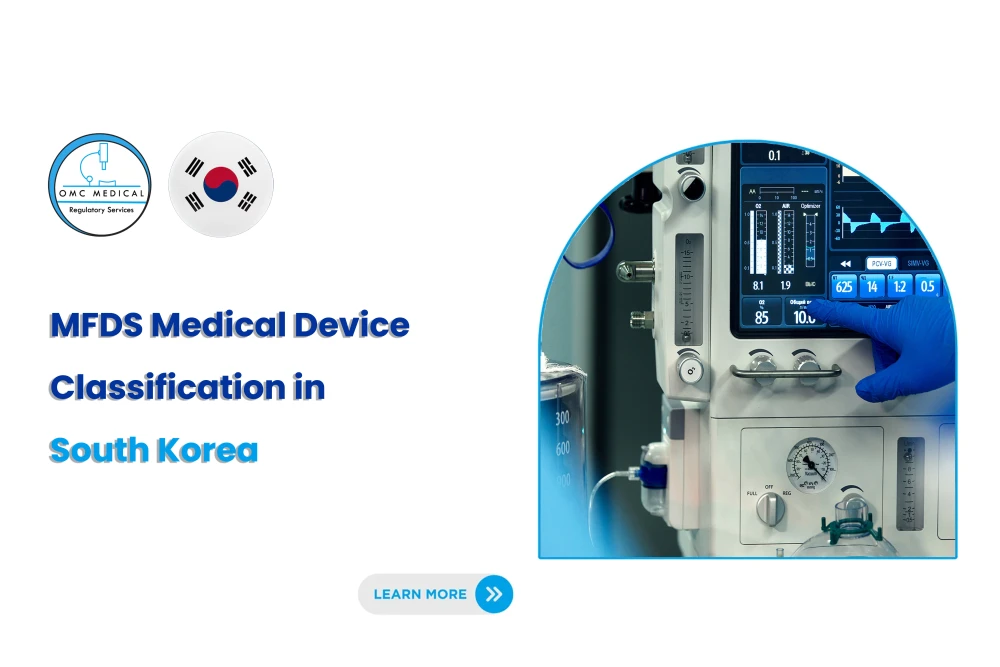
Medical device classification is the foundation of the entire regulatory process in South Korea. A wrong classification can lead to application rejection, delays, and increased costs.
The Ministry of Food and Drug Safety (MFDS) classifies medical devices into four risk-based categories (Class I to Class IV), which determine:
- Approval pathway
- Clinical data requirements
- KGMP certification scope
- Review timelines
In this guide, we provide a deep, practical understanding of MFDS classification with real examples and 2026 regulatory updates.
What is MFDS Medical Device Classification?
MFDS classification is a risk-based system that categorizes medical devices based on:
- Intended use
- Level of invasiveness
- Duration of contact with the body
- Potential risk to patients
The higher the risk, the stricter the regulatory requirements.
Ready to Streamline Your Regulatory Compliance?
Join hundreds of companies who trust OMC Medical for their regulatory needs. Get expert guidance and ensure compliance across all markets.
Call Now +44 208 066 7260MFDS Classification Overview (Class I–IV)
| Class | Risk Level | Approval Requirement | Example Devices |
|---|---|---|---|
| Class I | Low | Notification | Surgical gloves |
| Class II | Low–Moderate | Certification | Infusion pumps |
| Class III | Moderate–High | MFDS Approval | Ventilators |
| Class IV | High | Strict MFDS Approval | Implantable pacemakers |
Classification Rules (Core Evaluation Criteria)
1. Intended Use (Most Important Factor)
- Diagnostic vs therapeutic
- Preventive vs life-supporting
Example:
- Thermometer → Class I
- AI diagnostic tool → Class II/III
2. Duration of Use
| Duration | Impact |
|---|---|
| Transient (<60 min) | Lower risk |
| Short-term (<30 days) | Moderate risk |
| Long-term (>30 days) | Higher classification |
3. Invasiveness
- Non-invasive devices → lower class
- Invasive devices → higher class
- Surgically invasive devices → Class III/IV
4. Active vs Non-Active Devices
- Active devices (software, powered devices) → higher scrutiny
- Non-active devices → lower risk
5. Combination with Drugs or Biologics
Combined products generally receive higher classification, often Class III or IV.
Detailed Breakdown of Each Class
Class I – Low Risk Devices
Characteristics:
- Minimal risk
- Non-invasive
- No long-term contact
Examples:
- Surgical gloves
- Tongue depressors
- Manual stethoscopes
Regulatory Path:
- Simple notification process
- No full approval required
- No clinical data required
Class II – Moderate Risk Devices
Characteristics:
- Moderate risk
- May include active devices
- Limited invasiveness
Examples:
- Infusion pumps
- Diagnostic imaging software
- Dental materials
Requirements:
- Technical documentation
- KGMP certification
- Clinical data in some cases
Class III – High Risk Devices
Characteristics:
- Sustain or support life
- Significant impact on patient health
Examples:
- Ventilators
- Dialysis equipment
- Orthopedic implants
Requirements:
- Full MFDS approval
- Clinical data required
- Strict KGMP audit
Class IV – Highest Risk Devices
Characteristics:
- Life-supporting or life-sustaining
- High potential risk
Examples:
- Pacemakers
- Heart valves
- Implantable defibrillators
Requirements:
- Extensive clinical trials
- Full technical review
- Strictest regulatory control
2026 MFDS Classification Updates
1. AI & Software Reclassification
AI-based medical devices are now classified based on:
- Clinical impact
- Decision-making role
Many AI tools have shifted from Class I to Class II or III.
2. New Device Categories Introduced
- Digital therapeutics
- Remote monitoring devices
- Wearable medical devices
3. Increased Scrutiny on High-Risk Devices
- Stronger clinical data requirements
- More detailed validation processes
Common Classification Mistakes
- Using EU MDR classification directly
- Misinterpreting intended use
- Ignoring Korean-specific rules
- Underestimating AI/software classification
Real Case Scenarios
Case 1: AI Radiology Software
- Intended use: Diagnostic support
- Risk: High clinical decision impact
- Classification: Class III
Case 2: Wearable Heart Rate Monitor
- Non-invasive
- Monitoring only
- Classification: Class II
Case 3: Implantable Stent
- Long-term invasive
- Life-supporting
- Classification: Class IV
How Classification Impacts Approval Timeline
| Class | Estimated Timeline |
|---|---|
| Class I | 1–2 months |
| Class II | 3–6 months |
| Class III | 6–9 months |
| Class IV | 9–12+ months |
Higher classification generally means longer approval timelines.
Best Practices for Correct Classification
- Conduct regulatory assessment early
- Review the MFDS classification database
- Align with Korean regulatory guidelines
- Consult regulatory experts
How OMC Medical Can Help
OMC Medical provides expert classification and regulatory strategy support, including:
- Device classification assessment
- Regulatory pathway planning
- Technical documentation support
- MFDS submission management
We help manufacturers avoid misclassification and accelerate approvals in South Korea.
Get Expert Support
Not sure about your device classification?
Contact OMC Medical today for expert guidance on South Korea MFDS medical device classification and registration.