As part of FDA regulatory compliance, medical device manufacturers must not only register their establishments but also properly identify and list their devices.
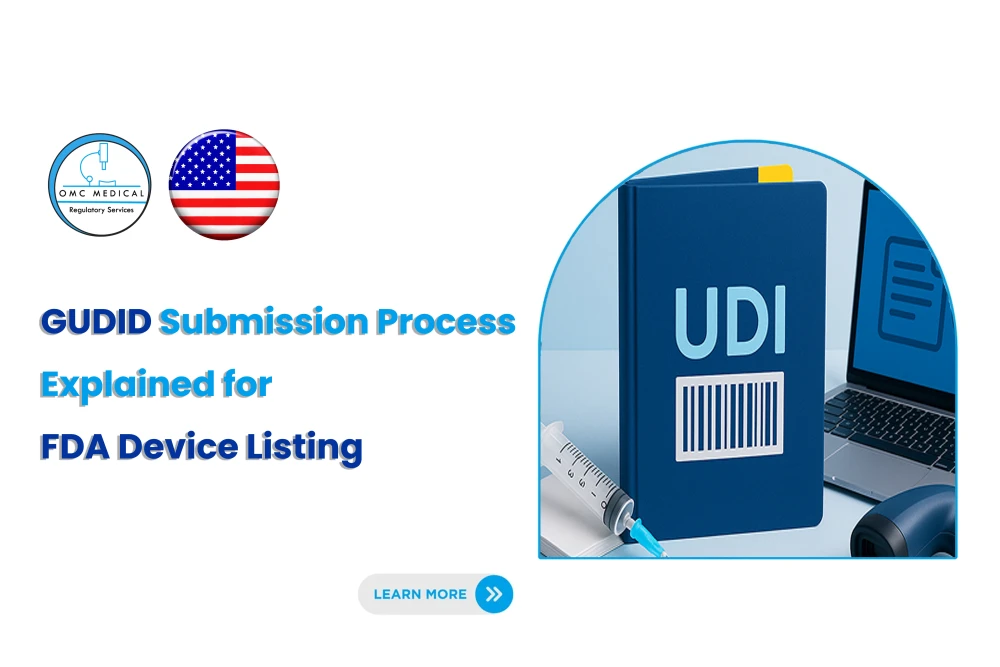
A critical component of this process is the Global Unique Device Identification Database (GUDID).
GUDID plays a central role in the FDA’s Unique Device Identification (UDI) system, ensuring traceability, safety, and transparency across the medical device lifecycle.
If you are planning to market your device in the United States, understanding the GUDID submission process is essential.
Ready to Streamline Your Regulatory Compliance?
Join hundreds of companies who trust OMC Medical for their regulatory needs. Get expert guidance and ensure compliance across all markets.
Call Now +44 208 066 7260In this guide, we will explain: --> What GUDID is --> How it relates to UDI --> Step-by-step submission process --> Common mistakes and best practices
What is GUDID?
GUDID (Global Unique Device Identification Database) is an FDA-managed database that stores key identification information about medical devices.
Manufacturers must submit device data to GUDID as part of compliance with UDI requirements.
👉 GUDID does not contain patient data—it only includes device-specific information such as: --> Device identifier (DI) --> Brand name --> Model/version --> Manufacturer details
What is UDI and How is it Connected to GUDID?
The Unique Device Identification (UDI) system assigns a unique code to each medical device to improve traceability.
UDI consists of: Device Identifier (DI) – identifies the device model Production Identifier (PI) – includes lot, serial number, etc.
👉 The DI must be submitted to GUDID, making it a mandatory requirement for FDA device listing.
This process is closely linked to your overall FDA establishment registration and device listing activities.
Who Must Submit Data to GUDID?
GUDID submission is required for: --> Medical device manufacturers --> Specification developers --> Repackagers and relabelers
👉 For foreign manufacturers, this requirement works alongside appointing a US FDA Agent, which ensures smooth regulatory communication.
When is GUDID Submission Required?
You must submit to GUDID: --> Before marketing your device in the US --> When introducing a new device model --> When there are significant changes to device information
👉 Delays in GUDID submission can result in non-compliance and listing issues.
Step-by-Step GUDID Submission Process
Understanding the process helps ensure smooth compliance.
Step 1: Obtain a UDI (Device Identifier)
You must first generate a UDI through an FDA-accredited issuing agency.
👉 This is the foundation of the GUDID submission process.
Step 2: Create a GUDID Account
Register in the FDA system and set up your organization account.
👉 This is done alongside your FDA registration activities.
Step 3: Prepare Device Data
Collect all required information, including: --> Device identifier (DI) --> Brand name --> Device description --> Packaging details --> Sterilization status
Step 4: Submit Data to GUDID
Data can be submitted via: --> Web interface (manual entry) --> HL7 SPL (automated submission for large volumes)
Step 5: Validate and Publish
Once submitted: --> FDA validates the data --> Device information is published in GUDID
👉 Only after this step is your device fully compliant for identification requirements.
Common GUDID Submission Errors
Avoid these frequent mistakes:
❌ Incorrect Device Identifier (DI)
Leads to rejection or data inconsistency.
❌ Missing Mandatory Fields
Incomplete submissions delay approval.
❌ Data Mismatch with Device Listing
Inconsistencies between GUDID and FDA listing records.
❌ Poor Data Maintenance
Failure to update changes in device information.
GUDID vs FDA Device Listing
This is a common confusion area.

👉 Both are required and must be aligned for compliance.
Why GUDID Compliance is Important
GUDID supports: --> Device traceability --> Faster recalls --> Improved patient safety --> Regulatory transparency
👉 It is also part of broader compliance requirements, including Current Good Manufacturing Practices (CGMP) and post-market monitoring.
How GUDID Impacts FDA Approval
While GUDID itself is not an approval process, it is essential for: --> Device listing completion --> Market entry compliance --> Post-market tracking
👉 It works alongside submissions like the 510(k) submission process and other regulatory pathways.
Best Practices for GUDID Submission
To ensure smooth compliance: --> Maintain accurate and consistent data --> Align GUDID with device listing information --> Regularly update device changes --> Validate data before submission
👉 Strong documentation practices reduce errors and delays.
How OMC Medical Can Help
Managing GUDID submissions requires precision and regulatory expertise.
OMC Medical provides: --> End-to-end GUDID submission support --> UDI implementation guidance --> FDA device listing assistance --> Data validation and compliance checks --> Ongoing regulatory support
👉 We ensure your device is accurately listed, compliant, and ready for the US market.
Conclusion
The GUDID submission process is a critical component of FDA compliance for medical devices.
By properly managing UDI and submitting accurate data to GUDID, manufacturers can: --> Ensure regulatory compliance --> Improve device traceability --> Avoid delays in market entry
A structured approach and expert guidance can make this process seamless and efficient.
FAQs
Q1. Is GUDID submission mandatory?
Yes, for devices subject to UDI requirements.
Q2. What is the difference between UDI and GUDID?
UDI is the identifier; GUDID is the database where it is stored.
Q3. Can I update GUDID data?
Yes, updates are required when device information changes.
Q4. Does GUDID replace device listing?
No, both are separate but interconnected requirements.