How to Prepare a Best-in-Class Technical File for UAE Medical Device Submission (2026 Guide)
UAE medical device technical file preparation is a critical requirement for obtaining regulatory approval from the UAE Ministry of Health and Prevention (MOHAP). A well-prepared technical file not only improves your chances of approval but also significantly reduces review timelines, regulatory queries, and resubmission risks.
In this guide, we explain how to prepare a best-in-class technical file for UAE medical device submission, covering documentation requirements, common mistakes, and practical tips to achieve faster market access in the UAE.
Why the Technical File is Crucial for UAE Medical Device Registration
A technical file is the primary regulatory evidence used by MOHAP to assess whether a medical device meets UAE medical device compliance requirements. It demonstrates:
Product safety and performance
Regulatory conformity
Risk management and clinical justification
Manufacturing quality and process control
Post-market surveillance readiness
Incomplete or poorly structured technical files are one of the top reasons for approval delays in UAE medical device registration.
Key Regulatory Expectations in the UAE
To prepare a compliant technical file, manufacturers must align with:
UAE medical device regulations
MOHAP technical documentation requirements
International standards such as ISO 13485 (QMS) and ISO 14971 (risk management)
Global regulatory approvals (EU, US, UK, etc.) where available
MOHAP often relies on prior approvals in reference markets, making global regulatory alignment an important strategy for smoother UAE submissions.
Step-by-Step Guide to Preparing a Best-in-Class Technical File
1. Administrative & Legal Documentation
Include manufacturer details, Free Sale Certificate, Authorized Representative information, and product identification details.
2. Device Description & Intended Use
Clearly define the device purpose, indications, user profile, accessories, and variants. Any mismatch between intended use and IFU can lead to regulatory objections.
3. Correct Product Classification
Accurate risk classification is essential. Incorrect classification often results in resubmission requests and approval delays.
4. Safety & Performance Compliance
Demonstrate compliance with essential safety and performance principles through a structured compliance matrix.
5. Risk Management File
Provide a complete risk management file including hazard identification, risk controls, and benefit-risk analysis.
6. Clinical Evidence & Performance Data
Support safety and performance claims with clinical evaluation reports, testing data, and literature evidence.
7. Manufacturing & Quality Management System
Include ISO 13485 certification, manufacturing process overview, and supplier controls to demonstrate consistent product quality.
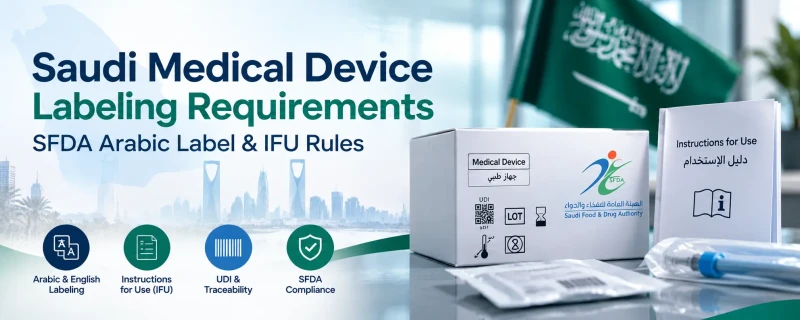
8. Labeling, IFU & Packaging
Ensure labels and IFU are consistent with intended use and regulatory expectations. Arabic labeling is recommended for UAE market acceptance.
9. Post-Market Surveillance & Vigilance
Define complaint handling, adverse event reporting, and field safety corrective action processes to meet UAE post-market compliance expectations.
Common Technical File Mistakes That Delay UAE Approval
Missing or outdated documents
Inconsistent intended use statements
Incorrect device classification
Weak clinical justification
Poorly structured or unorganized technical files
Avoiding these mistakes significantly improves approval timelines.
Best Practices for Faster MOHAP Approval
Conduct a regulatory gap assessment before submission
Align documentation with ISO standards
Ensure consistency across all technical and clinical documents
Maintain traceability between safety requirements and evidence
Prepare for regulatory questions in advance
How OMC Medical Can Support Your UAE Submission
OMC Medical provides end-to-end regulatory support for UAE medical device registration, from technical file preparation and gap analysis to MOHAP submission management and post-market compliance. Our regulatory experts help ensure your documentation meets MOHAP expectations, reducing approval timelines and minimizing regulatory risks.
With a strong understanding of UAE regulatory requirements and global medical device compliance standards, OMC Medical acts as your trusted partner for achieving faster, smoother market access in the UAE.
Conclusion
Preparing a best-in-class technical file is the foundation of successful UAE medical device regulatory approval. By aligning documentation with MOHAP requirements and international standards, manufacturers can achieve faster approvals, smoother regulatory interactions, and long-term compliance in the UAE market.
Conclusion
Preparing a best-in-class technical file is the foundation of successful UAE medical device regulatory approval. By aligning documentation with MOHAP requirements and international standards, manufacturers can achieve faster approvals, smoother regulatory interactions, and long-term compliance in the UAE market.